Главный редактор
The Russian Peasant Studies is the successor to the yearbook Peasant Studies first published in 1996 and edited by two prominent agrarian scientists – Viktor Danilov and Teodor Shanin. The yearbook was published by the Center for Peasant Studies and Agrarian Reforms of the Intercenter and the Moscow School of Social and Economic Sciences. It was created under the post-Soviet agrarian reforms, hopes and disappointments of perestroika, which certainly raised the issues of the historical and contemporary fates of rural Russia and peasantry in the 20th century.
As a yearbook, the Peasant Studies aimed primarily at reviving the intellectual heritage of Russian peasant scientists of the early 20th century, whose lives and works were forgotten due to the tragic events of wars, revolutions, repressions and Soviet collectivization. Certainly, the main task of the yearbook was the integration of Soviet and post-Soviet agrarian research into the world agrarian science by publication of the translations of classical and contemporary Russian and international peasant-studies projects. The yearbook aimed at introducing to the readers works of Russian and foreign scholars on the interdisciplinary study and understanding of the forms and directions of the agrarian development of Russia and the world. The structure of the yearbook Peasant Studies – theory, history, the present time and scientific life – comprehensively reflected the work of historians, economists, sociologists, anthropologists, geographers, cultural and political scientists, who studied rural worlds in their past, present and future.
Not always the yearbook Peasant Studies managed to be published annually. From 1996 to 2005, only five issues were published, and among them, in 2002, the special issue Reflective Peasant Studies – a collection of the selected methodological and analytical works based on the data of field studies conducted in the 1990s by the Center for Peasant Studies of the Moscow School of Social and Economic Sciences. The Peasant Studies published in 2005 was dedicated to the memory of its first editor Viktor Danilov and consisted of unique historical and sociological data.
Since 2011, the yearbook Peasant Studies has been published by the Center for Agrarian Studies of the Russian Presidential Academy of National Economy and Public Administration, which sought to preserve and develop the research traditions of Viktor Danilov and Teodor Shanin, their colleagues and students.
Thus, in its twenty-year history the yearbook Peasant Studies managed to create a unique academic network of Russian and foreign agrarian researchers, who conducted a number of large-scale interdisciplinary agrarian projects. The works published in the Peasant Studies served as the basis for a number of courses at several Russian universities.
Despite its title, the yearbook has never limited its issues only to peasant studies and became an interdisciplinary agrarian edition that described the course of Russian and foreign agrarian reforms, challenges of rural development of large and small agricultural production, market and mixed economies, innovations in agribusiness, rural local self-government and resettlement, rural-urban migration, informal economy, rural biographies, interdisciplinary methods of agrarian studies. However, the central and most debated topic of the Peasant Studies has always been the concept of ‘peasantry’ in the contemporary world. The widespread skeptical rationalist opinion of our time insists that the peasant question was relevant in the past but in the late 20th century disappeared under the pressure of ‘universal progress’ represented in the rural sphere by the expansion of industrial agribusiness, i.e. to seriously discuss the importance of the peasantry today is as if acceptable only for conservative romantics and radical utopians.
The debates on the fatal disappearance of the peasantry from the paths of social development in Russia and the world, and on the possible new prospects for the still numerous peasantry and similar rural and even urban social strata – farmers, agricultural workers, summer residents – continue on the pages of the journal Russian Peasant Studies together with the studies of new directions of rural evolution related to the agrarian challenges of our time, development of new agricultural and biotechnologies, prospects for the cultural transformation of the countryside and intensification of rural-urban migration.
As a quarterly edition, today the scientific journal Russian Peasant Studies aims at objective and timely analysis of the paths of Russian and international rural development and at supporting large-scale cooperation of agrarian researchers representing different scientific disciplines.
Review Policy for the Russian Peasant Studies Journal
The reviewing of all articles published in the Journal is an obligatory procedure. The reviewing allows to comply with the ethical standards adopted by the international scientific community and to prevent any violations of these rules in personal work as well as in relations with all participants of the science publication process. A double-blind peer review method is mandatory for processing of all scientific manuscripts submitted to the Editorial Board. This implies that neither the reviewer is aware of the authorship of the manuscript, nor the author maintains any contact with the reviewer.
- Members of the Editorial Board and, as minimum, two external leading global experts in corresponding areas of sciences, invited as independent reviewers, perform peer reviews. Editor-in-chief, Deputy editor-in-chief or Science editor choose reviewers for peer review.
The decision as to publication is made within no less than six months from the day the paper is registered at the editorial office. Materials which are not accepted for publication will not be returned. The editors will not enter into correspondence with the authors in case of refusal to publish the articles submitted by them. - Reviewer has an option to abnegate the assessment should any conflict of interests arise that may affect perception or interpretation of the manuscript. Upon the scrutiny, the reviewer is expected to present the editorial board with one of the following recommendations:
- to accept the manuscript in its present state;
- to accept the manuscript after corrections by author specific concerns marked by rewiewer, without additional review;
- the manuscript needs revision and subsequent additional reviewing;
- the manuscript cannot be published in the journal even after revision.
If the reviewer has recommended any refinements, the Editorial Board would suggest the author either to implement the corrections, or to dispute them reasonably. Authors are kindly required to limit their revision to 1,5 months and resubmit the revised manuscript within this period for final review.
- We politely request that the editor be notified verbally or in writing should the author decide to refuse from publishing the manuscript. In case the author fails to do so within 2 months since receiving a copy of the initial review, the editorial board takes the paper off the register and notifies the author accordingly.
- If author and reviewers meet insoluble contradictions regarding revision of the manuscript, the Editor-in-chief resolves the conflict by his own authority.
- The Editorial Board reaches final decision to reject a manuscript on the hearing according to reviewers’ recommendations, and duly notifies the authors of their decision via e-mail. The board does not accept previously rejected manuscripts for re-evaluation.
- Upon the decision to reject the manuscript for publishing, the Editorial Board notifies the authors by e-mail with the corresponding arguments. In case of rejecting papers for publication, there are no review sent to authors.
- Upon the decision to accept the manuscript for publishing, the Editorial Board notifies the authors of the scheduled date of publication. Kindly note that positive review does not guarantee the acceptance, as final decision in all cases lies with the Editorial Board. By his authority, Editor-in-chief rules final solution of every conflict.
Russian Peasant Studies
Mission
Informing the scientific and general public about the progress and results of research in the field of history, methodology and empirical research in the field of peasant studies, rural sociology and social geography.
Aims and Scope
The publication of original articles, translations and reviews in the field of theory, history, methodology and empirical research in the field of peasant studies, rural sociology and social geography.
Target readership audience
The audience includes, but not limits academics, university students and teachers, researchers, practitioners, organizational developers, policy designers and makers.
Editorial Policy
Articles are accepted for publication in Russian or English on topics relevant to the mission and goals of the journal. The journal does not charge authors for publication and processing fees. Articles that were previously published in other publications, as well as in the form of online preprints, are not accepted for publication. Articles submitted to the editor for publication should not be published elsewhere before. Detailed article requirements are published in the section For Authors. Details of publication ethics are published in the section Publishing Ethics.
Review policy
Double blind review process allpies to all articles. Initial review of the articles to comply with the standards of the Journal, as a rule, takes 5 working days after its submission. This review assesses the article to satisfy the scope and the standards of the journal on the basis of the checklist and the sample of the manuscript presented in the section "Author Guidelines". If the article does not meet the standards of the Journal and/or is out of its scope, it is rejected. Resubmission of the manuscript is possible after bringing it into line with the requirements of the journal. The decision will be sent to e-mail the article is came from.
Copyrights
The copyright for articles published in the journal belongs to the authors. When using materials created by other authors (texts, tables, images) in the articles, the authors and / or copyright owners of these materials should be indicated. The authors retain the right to non-commercial use of published articles for non-commercial (including scientific, educational and educational) purposes with the reference, hyperlink and DOI of the publication in this Journal.
Data exchange policy
The journal “Russian Peasant Studies” encourages authors to share the data supporting the results in the paper by archiving it in an appropriate public repository or making available from the corresponding author upon reasonable request. Authors may provide a data availability statement that can be published in their paper. Authors can consult the repository indexing services https://www.re3data.org and https://fairsharing.org, or their affiliated organisation if it provides a repository for its researchers.
Retracting procedures
In case of violations of publication ethics, the resolution of contentious issues, including the exclusion (retraction) of articles from the journal, the editors adhere to the procedures described in the Declaration Association of Scientific Editors and Publishers (RASSEP)  and the Retraction Guidelines of the Publication Ethics Committee (COPE). If the violation of publication ethics is confirmed, the editors have the right to refuse to cooperate with the author for a specified period or indefinitely.
Distribution
All electronic versions of articles and full issues of the journal are distributed free of charge in PDF format under a non-commercial license Creative Commons Attribution-NonCommercial-NoDerivatives 4.0 International License, which means that any user has the right to download and distribute materials in without changing the content (content, text) with mandatory attribution (bibliographic record and hyperlink to the original location of the material on the site).
Hard copies of the journal can be purchased in the e-store of the Delo Publishing House or by subscription in the "Pressa Rossii" agency (index Т81017). The editors can distribute a limited number of hard copies at their own discretion.
Publication frequency
Four issues per year (March, Jun, September, December)
Archiving
- Russian State Library (RSL)
- Russian Scientific Electronic Library
Funding
The journal is funded by the founder.
Publisher
Center for Agrarian Studies of Russian Presidental Academy for National Economy and Public Administration (RANEPA). Founded in 2016. Registration ПИ № ФС77-65824 (27.05.2016). IISSN 2500-1809 (Print), ISSN 2949-2564 (Online)
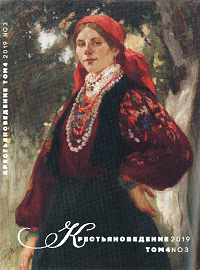
Theory
Kedrov N.G. Viktor Danilov’s four conceptions of collectivization / 6
Uleri F. Capitalism and the peasant mode of production: A Chayanovian analysis / 43
History
Savinova T.A. The last ‘semidesyatnik’ (representative of the 1870s): On the biography of Vasily Nikolaevich Grigoriev (1852–1925) / 61
Zaslavskaya T.I. “... I am pressed for time now” (Letters of Tatiana Ivanovna Zaslavskaya of 1972–1974) / 78
The present time
Vinogradskaya O.Ya. Why and from what townspeople move to the village: Phenomenology and practice / 140
Pivovar G.A., Savoskul M.S. Changes of footpaths in rural areas as an indicator of the rural lifestyle transformations / 156
Interviews
Schneider S., Nikulin A.M. “In the joint comparative studies, there is much we can learn from each other” / 167
Reviews
Babashkin V.V. On the benefits of conservatism, or To what do we owe…? / 195
Scientific life
Kurakin A.A. Ways of rural development of Russia and China / 201
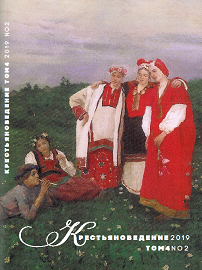
Theory
Chayanov A.V. A Short Course on Cooperation (Article of A.V. Chayanov) / 8
Kuznetsov I.A., Grishin E.S. A.V. Chayanov as a researcher of the three-field system: A publishers’ preface / 57
Chayanov A.V. The southern border of the prevailing three-field system of farming in the peasant lands of Russia by the early 20th century (Article of A.V. Chayanov) / 62
History
Il'inykh V.A. Organization of the agronomic services in Siberia in the 1920s: Discourse and choice / 83
Savino G. “Land hunger” of the Italian peasantry: From the unification of the country to the agrarian reform / 108
The present time
Alekseev A.I., Efimova O.Yu., Tkachenko A.A. The spatial structure of kinship (on the example of the Zharkovsky settlement of the Tver Region) / 128
Gusakov T.Yu. Municipal reform of 2015 in Ukraine: Implementation and first results / 138
Interviews
Kiselev S.V., Nikulin A.M. “Culture is a factor of labor productivity” / 160
Reviews
Babashkin V.V. Unwitting will / 177
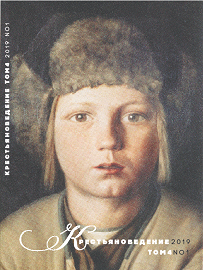
Theory
Makarov N.P. At the great crossroads. The comparative analysis of the evolution of agriculture in China, the United States of North America, the USSR, and Western Europe (Article of N.P. Makarov) / 6
History
Kuznetsov I.A. The agrarian revolution of 1917 in Russia: Is it worth studying economic history and forgetting the sad end? / 22
Merl S. Reassessment of the Soviet agrarian policy in the light of today’s achievements / 45
The present time
Vinogradsky V.G., Vinogradskaya O.Ya. Ecology of the rural world in the perception of peasants / 70
Rogozin D.M., Vyugovskaya E.V. Autoethnography of the rural house in the Russian North / 98
Interviews
Nefedova T.G., Nikulin A.M. “You have to work, and they will find you and will offer you everything” / 123
Reviews
Poleshchuk I.K. Prospects and realities of the technological radicalization of everyday life / 159
Scientific life
Shagaida N.I. Institutional restructuring of agriculture is complete: what is next? / 173
Tolstov S.I., Usoltseva O.V. Rural historical regional studies in the Tomsk Region / 179
Theory
Kuznetsov I.A., Savinova T.A. Basile Kerblay and Alexander Chayanov: At the crossroads of knowledge / 6
Gurevich O.E., Kerblay B. “I thank you heartily for bringing the works and the name of Alexander Vasilyevich Chayanov from oblivion” / 9
Kerblay B. A.V. Chayanov. Evolution of the Russian agrarian thought from 1908 to 1930: At the crossroads (Article of B. Kerblay) / 17
Berelowitch A. Basile Kerblay — an explorer of Russia / 69
History
Gordeeva I.A. Refusals to serve in the military and development of the Russian pacifist movement in the late 19th — early 20th century / 78
Goncharova I.V., Chuvardin G.S. Communes of the Central Black Earth Region from “war communism” to collectivization: Design and implementation / 105
The present time
Vinogradskaya O.Ya. Ontological foundations of the townspeople moving to the village / 123
Smolkin A.A. Transformation of rural migrants’ attitudes to the elderly / 136
Gataulina E.A. On the improvement of the All-Russian Agricultural Census / 150
Reviews
Scientific life
Averkieva K.V. Seminar-conference “Participatory Development of Cities and Rural Areas” / 196
Theory
Chayanov A.V. Letter from A.V. Chayanov to V.M. Molotov on the current state of agriculture in the USSR compared with its pre-war state and the situation in agriculture of capitalist countries (October 6, 1927) / 6
Vorbrugg A. Not about land, not quite a grab: Dispersed dispossession in rural Russia / 19
History
Kedrov N.G. Ivan Semenovich Kuznetsov in the context of three mythologies of collectivization / 48
Round table “The 100th anniversary of the academician Alexander Alexandrovich Nikonov (1918–1995)” / 70
The present time
Fadeeva O.P., Nefedkin V.I. “Regional dirigisme” and rural self-organization in Tatarstan / 95
Bozhkov O.B. Same addresses 10 years later (first impressions of the expedition-2018 to Boksitogorsky and Babaevsky districts) / 115
Interview
Uzun V.Ya., Nikulin A.M. “I often wondered what really useful could be done for peasants” / 128
Reviews
Babashkin V.V. Retrospectives of “unpromising villages” / 186
Scientific life
The Russian Peasant Studies publishes original papers, translations, and review articles on theoretical, historical, methodological and empirical issues in the field of peasant studies, rural sociology and social geography. Please note that the journal will not consider papers that were previously published as articles in other journals or as pre-prints online. The submitted paper should be original and not have been published elsewhere. By submitting a paper, an author(s) agrees not to publish it elsewhere either in full or partly without written consent of the Russian Peasant Studies editorial board.
We accept submissions in Russian, and English. All the journal submissions are subject to the double blind peer-reviewing process. The Russian Peasant Studies accepts papers up to 10 000 words in one file of Microsoft Word format (.doc, .docx, .rtf). We expect that an author(s) identifies and lists all the sources and literature used in the paper. Quotes should be clearly marked. Abbreviations should be explained.
We do not accept any fees from the authors for publication.
Before submitting please verify the checklist. Please send your submissions to the following address: This email address is being protected from spambots. You need JavaScript enabled to view it.. The submission should have two files. The first one should contain author(s) information and the title of the paper while the second file should contain the main text (including abstract, keywords etc.) without any reference to author(s) identity.
Authorship and co-authorship policy
By submitting the article for review to the journal, the authors confirm their authorship. When a manuscript is written by a group of authors, one of them handles the manuscript submission process, acknowledging all co-authors. Each co-author must have participated sufficiently in the study to be listed as a co-author
Reference style for bibliographies in English
Each reference element should comply with the standards of the journal. For research articles the element should have an author, a date of publication, a title (transliterated if in Russian with followed by translation in English), a journal title in italics with No. and volume of issue and pages. For chapters in books there should be an author, a date of publication, a chapter title (transliterated if in Russian, followed by translation in English), a book title in italics, editors, a place of publication, a publisher and pages.
For books the element should have an author, a date of publication, a book title in italics, a place of publication, a publisher and pages. For accuracy please consult the following samples. For electronic sources it is compulsory to add the hyperlink and the date of access: Available at: www-link (accessed DD Month Year). If there is a digital object identifier (DOI) it is necessary to include this information as well.
Sample reference list
Badiou A. (2006) Being and Event, New York: Continuum.
Benjamin W. (2006) The work of art in the age of its technological reproducibility. Selected Writings, vol. 3: 1935–1938, Cambridge: Harvard University Press, pp. 101–133.
Nez H. (2012) Délibérer au sein d’un mouvement social: ethnographie des assemblées d’Indignés à Madrid. Participations, vol. 4, no 3, pp. 79–102.
Veselkova N. (1994) Poluformalizovannoye interview [Semi-structured interview]. Sotsiologichesky Jurnal, no 3, pp. 103–109 (In Russ.).
Kletsin A. (1996) Sotsiologiya semyi [Sociology of family]. Sotsiologiya v Rossii [Sociology in Russia] (ed. by V.A. Yadov), Moscow: “Na Vorobieuvih gorah”, Institute of Sociology, Russian Academy of Science, pp. 147–168 (In Russ.).
Freidenberg O. (1998) Mif i literatura drevnosti [Myth and Literature in Antiquity], Moscow: Vostochnaya literatura (In Russ.)
Durkheim E. (2008) Metod sotsiologii [Sociological method]. Durkheim E. Sotsiologia: ee predmet, metod, prednaznachenie [Sociology: Its Subject, Method, and Purpose], Moscow: TERRA-Knizhniy Club, pp. 45–200.
Checklist
|
|
In Russian* |
In English |
|
Abstract (200-250 words) |
+ |
+ |
|
Keywords (9 -12) |
+ |
+ |
|
Article's Title |
+ |
+ |
|
Article's text (up to 40000 characters including spaces) |
In Russian OR in English | |
|
Main Bibliography list |
In the same language as the Article | |
|
References |
In the same language as the Article | |
|
Authors’ details 1. Last name(s), First name(s) |
+ |
+ |
Center for Agrarian Studies
Russian Presidential Academy of National Economy and Public Administration
The journal Russian Peasant Studies is published by the Center for Agrarian Studies of the Russian Presidential Academy of National Economy and Public Administration
Head of the Center: Nikulin Alexander
Address: office 418, building 5, 84 Prosp. Vernadskogo, Moscow, 119571, Russia
Phone: +7-499-956-95-56
E-mail This email address is being protected from spambots. You need JavaScript enabled to view it.
Main tasks:
- Interdisciplinary and comparative agrarian studies in Russia and other countries
- Combination of fundamental (academic) and applied (political/business) agrarian research
- Combination of research and educational activities
Structure:
- Agrarian-economic research (economics, law, management)
- Regional studies (geography, sociology, political science)
- Peasant studies (history, anthropology, cultural studies)
Activities:
- Academic research
- Applied studies
- Agrarian workshops and conferences
Publications:
- Scientific journal Russian Peasant Studies
- Collections and monographs on the results of research projects
Partners:
- Russian and international academic institutions and universities
- State and municipal bodies
- Business enterprises
- Political organizations
- Non-government, non-profit foundations
Scientific life
- Russian Peasant Studies in Russian State index of scientific journals ("white list")
Dear colleagues!
Our journal, along with other scientific journals published by RANEPA, is included in the Russian State List of Scientific Publications (the "White List").
Information about the Russian State List of Scientific Journals
Journal profile at the Russian Center for Scientific Information
Press release on the RANEPA websiteWe are pleased that the results of our work over the 10 years of the journal's existence have been so highly recognized!
















Friends and Partners